Welcome to uLearnBig, a place to learn and educate.
Top videos
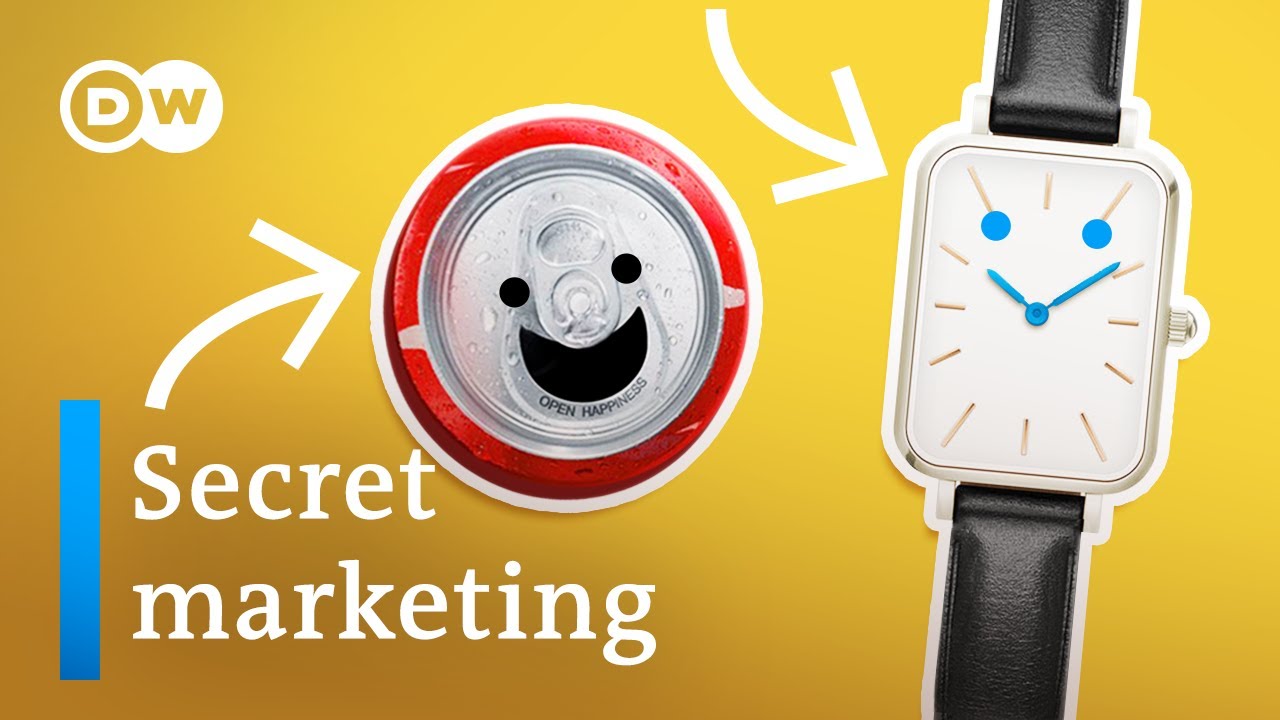
Businesses have always been looking for ways to sell us more things – which we may or may not need. As we learn more about the inner workings of the human brain, they are now venturing into a new realm on this quest – our subconscious minds.
We're destroying our environment at an alarming rate. But it doesn't need to be this way. Our new channel Planet A explores the shift towards an eco-friendly world — and challenges our ideas about what dealing with climate change means. We look at the big and the small: What we can do and how the system needs to change. Every Friday we'll take a truly global look at how to get us out of this mess.
► Check out our channel trailer: https://youtu.be/T8EiTHe6eXg
► Want to see more? Make sure to subscribe to Planet A!
#planeta #neuromarketing #consumerism
READ MORE
Blindsight: The (Mostly) Hidden Ways Marketing Reshapes Our Brains:
https://www.popneuro.com/book
Neuromarketing. What You Need to Know:
https://hbr.org/2019/01/neurom....arketing-what-you-ne
Neuromarketing and Ethics:
https://hbr.org/2019/01/when-n....euromarketing-crosse
Study: In-store music affects product choice:
https://www.nature.com/articles/36484
Reporter: Malte Rohwer-Kahlmann
Camera: Henning Goll
Video Editor: Frederik Willmann
Supervising Editor: Kiyo Dörrer

Are More Expensive Clothes Actually Better Quality?
Instagram → @timdessaint
“You get what you pay for” - I’m sure you’ve heard this saying many times before; and that can certainly be true in many areas. A higher price often comes with better quality/service/experience, but not always; so in today’s video we’re going to find out if that applies to fashion.
Timestamps:
0:00 - Intro
0:46 - Categories of Fashion Brands
2:21 - How To Recognize Poor vs Good Quality In Clothes
7:15 - Does Quality Increase With Price?
9:14 - Price/Quality Relationship In Jewelry
10:18 - The Placebo Effect
—
Music downloaded from Epidemic Sound: http://share.epidemicsound.com/tgVQ8
—
Shot with:
- Canon EOS R6: https://amzn.to/3AGD4OA
- Canon RF 24-70mm F2.8 L IS USM Lens: https://amzn.to/3U2r6FJ
- Canon C70: https://amzn.to/3zoy0xh
- Canon RF 28-70mm F2.0 Lens: https://amzn.to/3mypwRv
—
FTC: This video is not sponsored. Some of the links above are affiliate links, meaning that I will earn a small percentage of sales when you click through and make a purchase, at no additional cost to you.

This budgeting method I talk about in today's video really changed the way I view my own finances. It's called the P&L Method, or running your life like you would a business. Every month, I have my own personal P&L sheet, and I've also created one for you guys so you can budget on your own today too.
The P&L Method Template: https://beacons.ai/humphreytalks/freedownloads
Please support this channel by checking out our partners:
🏆 Webull Deposit a Minimum of $500 and Get a Guaranteed $50 Free Stock: https://www.webull.com/k/HumphreyYang
🏆 WeBull UK: https://www.webull-uk.com/i/humphreyUK (Get up to 6 Free Stocks when you deposit ANY amount and maintain funds for 30 days)
💸 SoFi Checking & Savings: https://sofi.com/humphrey Get up to 4.40% APY, pay no account fees and earn $250 when you sign up and set up direct deposit. Terms apply.
Follow me on social media:
Instagram -- https://instagram.com/humphreytalks
Twitter -- https://twitter.com/humphreytalks
TikTok -- https://tiktok.com/@humphreytalks
Rickie (Editor) ➭ https://instagram.com/coldgamerick
RESOURCES:
💵 Free Guides / Templates: https://beacons.ai/humphreytalks/freedownloads
🐪 Hump Days Newsletter ➭ https://humpdays.substack.com
▶️ Join the Patreon Community ➭ https://patreon.com/humphreytalks
💳 My Favorite Credit Cards ➭ https://cardonomics.com/i/humphrey
👾 Join the Discord ➭ https://discord.gg/jF8dZySg59
Timestamps:
0:00 - Start Here
0:36 - Step 1: Being Aware
1:42 - Tracking Expenses Challenge
3:24 - Embarrassment & Finances
4:55 - 4 Things To Get Better
6:17 - THE BUDGETING METHOD
8:51 - Zero-Based Alternative
9:54 - How to Allocate Money
13:07 - Where People Get Stuck
PS: I am not a current Financial Advisor, any investment commentary are my opinions only. Some of the links in this description are affiliate links that I do receive a commission for & they help support the channel!
🔍 In this video, we unravel the layers of AI, Machine Learning, Deep Learning, and their applications in tools like #chatgpt and Google #bard
we first go through how AI is a broad field of study that encompasses #machinelearning as a sub-field.
We then break down Machine Learning into supervised and unsupervised models, using real-world examples to illustrate their functions and differences.
We move deeper into Deep Learning: Learn about artificial neural networks and the power of semi-supervised learning in applications like fraud detection in banking.
Then we delve into Generative AI, differentiating it from discriminative models and demonstrating its capabilities in creating new, innovative outputs.
Finally we walk through Large Language Models (LLMs) and uncover the significance of LLMs in AI, their pre-training processes, and their customization for specific industry applications
*THE NO BS PRODUCTIVITY NEWSLETTER* 📧
https://www.jeffsu.org/productivity-ping/
*TIMESTAMPS*
00:00 Google’s AI Course in 10 Minutes
00:38 What is Artificial Intelligence?
01:27 What is Machine Learning?
03:28 What is Deep Learning?
05:15 What is Generative AI?
07:05 What are Large Language Models?
*RESOURCES I MENTION IN THE VIDEO*
Google’s full course: https://www.cloudskillsboost.g....oogle/course_templat
*MY FAVORITE GEAR*
🎬 My YouTube Gear - https://www.jeffsu.org/yt-gear/
🎒 Everyday Carry - https://www.jeffsu.org/my-edc/
*MY TOP 3 FAVORITE SOFTWARE*
❎ CleanShot X - https://geni.us/cleanshotx
✍️ Skillshare - https://geni.us/skillshare-jeff
📖 Readwise - https://readwise.io/jeffsu/
*BE MY FRIEND:*
📧 Subscribe to my Productivity newsletter - https://www.jeffsu.org/productivity-ping/
📸 Instagram - https://instagram.com/j.sushie
🤝 LinkedIn - https://www.linkedin.com/in/jsu05/
*👨🏻💻 WHO AM I:*
I'm Jeff, a tech professional trying to figure life out. What I do end up figuring out, I share!
_PS: Some of the links in this description are affiliate links I get a kickback from and my opinions are my own and may not reflect that of my employer_ 😇
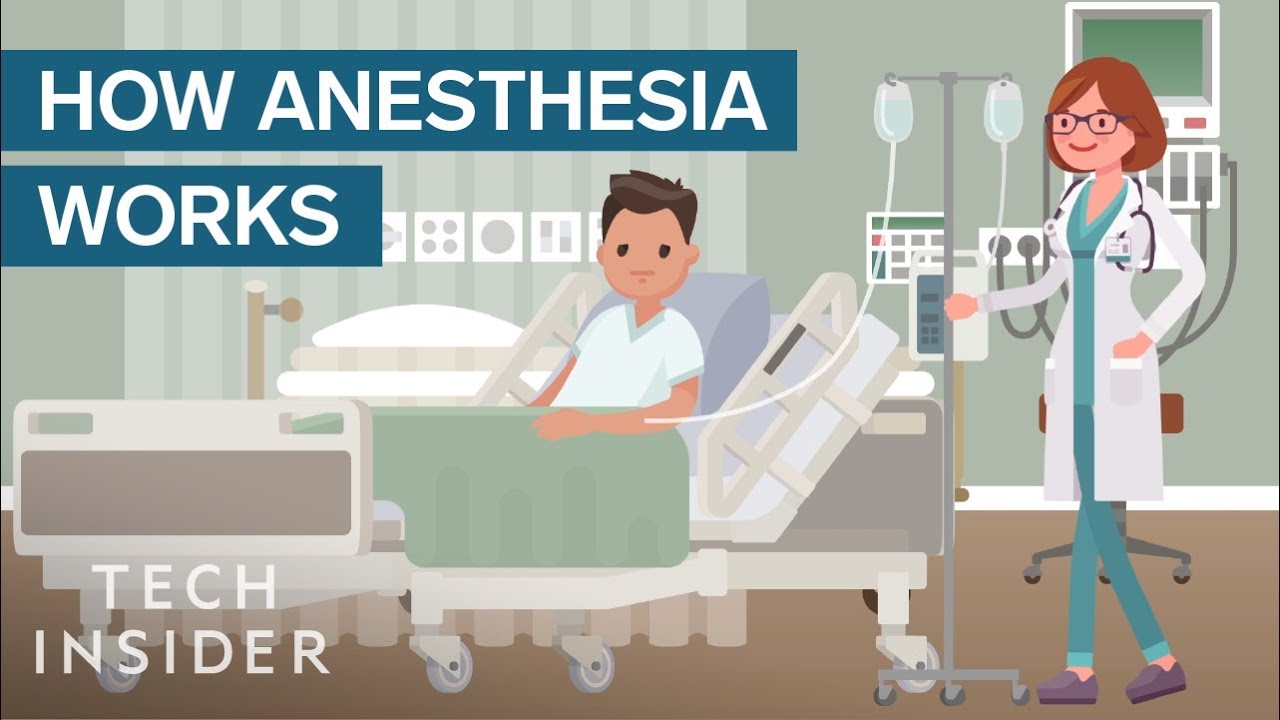
Millions of Americans are administered anesthesia each year. Since 1846, doctors have used a variety of drugs to make patients unconscious for surgery, but even though the medications have changed, there's one thing that remains the same— it works. But how exactly?
Tech Insider tells you all you need to know about tech: gadgets, how-to's, gaming, science, digital culture, and more.
Subscribe to our channel and visit us at: http://www.businessinsider.com/sai
TI on Facebook: https://www.facebook.com/techinsider
TI on Instagram: https://www.instagram.com/tech_insider/
TI on Twitter: https://twitter.com/techinsider
INSIDER on Snapchat: https://insder.co/2KJLtVo
--------------------------------------------------
Following is the transcript of the video:
Narrator: When you go to sleep, if I pinched you, you'd be up. If I shook you, you'd be up, right? But under anesthesia, I'm gonna pinch you and do a full operation and you're not up. So it's really further on the spectrum of unconsciousness.
Narrator: When you wake up after being put under with general anesthesia you barely feel like any time has passed. You could have been out for an hour or a day and you wouldn't know the difference.
Fong: When you go to a natural sleep, people call your name, your alarm goes off, you wake up, right? This is not what is gonna happen during general anesthesia. You're gonna be unconscious.
Narrator: You're closer to being in a coma than being asleep.
Anesthesia was first used during surgery in 1846. The drug provided at that time was ether. Now anesthesiologists more commonly use a combination of drugs like propofol and fentanyl which interrupt neural pathways so you don't feel pain and you don't remember the surgery.
Fong: Three things that you need for general anesthesia are you need amnesia so that they don't remember, analgesia so they have pain relief and then operating conditions for the surgeon. Some surgeries you need the patient to be very relaxed so you would use a muscle relaxant. Other surgeries the patient just needs to be asleep and anesthetized but they don't need relaxation so how they do that varies upon the different medications that you're using. Some will depress excitatory neurons and some will enhance inhibitory neurons.
Narrator: Excitatory neurons, for example, get excited and send signals to other neurons to fire. Depressing them means less signals telling your brain you're in pain. Inhibitory neurons do the opposite. They make it harder for neurons to generate these electrical signals. In either case this means fewer active neurons overall which is important because when your body is being poked and prodded, neurons would typically fire to tell your brain you're in pain. If those neurons aren't firing, your brain doesn't know that your body is, well, being cut open.
Fong: Basically it interrupts the pathways and the communication between your neural networks. We're aiming for them to be not in pain by looking at their vital signs, their heart rate, their blood pressure. Then we want to make sure that they're unconscious.
Narrator: Without anesthesia, many important surgeries wouldn't be possible because they'd be way too traumatic.
Fong: Surgery didn't move forward, really, until anesthesia moved forward. You know, you watch those old movies. They give you a swig of alcohol, they put a tourniquet and they hack your leg off. People don't do well with that, right? If you had a bad heart, that would be the end of that.
Narrator: After the procedure is complete the doctors stop administering the meds and the most powerful effects of the drugs wear off but even though you're conscious again you might continue to experience some of the drugs side effects.

There is one question that, perhaps more than any other, gets to the root of who we are and what motivates us: “What did I need to do in childhood to win the support and approval of my parents?” We might - to sharpen the picture - need to lean on a few subsidiary enquiries…
Enjoying our Youtube videos? Get full access to all our audio content, videos, and thousands of thought-provoking articles, conversation cards and more with The School of Life Subscription: https://t.ly/_D9cB
Learn, heal and grow. Get the best of The School of Life delivered straight to your inbox: https://t.ly/cUQdU
FURTHER READING
You can read more on this and other subjects in our articles, here: https://t.ly/JYcLU
“There is one question that, perhaps more than any other, gets to the root of who we are and what motivates us:
What did I need to do in childhood to win the support and approval of my parents?
We might - to sharpen the picture - need to lean on a few subsidiary enquiries:
To please my father, I needed to…
To please my mother, I needed to…
Not to upset my mother, I needed to…
Not to upset my father, I needed to…
Whatever might be claimed, no family ever gives its offspring unconditional love; there is always, more or less subtly, something that one has to do and to be - and other things that must at all costs be skirted…”
MORE SCHOOL OF LIFE
Watch more films on SELF in our playlist:
http://bit.ly/TSOLself
SOCIAL MEDIA
Feel free to follow us at the links below:
Facebook: https://www.facebook.com/theschooloflifelondon/
Twitter: https://twitter.com/TheSchoolOfLife
Instagram: https://www.instagram.com/theschooloflifelondon/
LinkedIn: https://www.linkedin.com/compa....ny/the-school-of-lif
CREDITS
Produced in collaboration with:
Deanca Rensyta
https://www.deancarensyta.com
Title animation produced in collaboration with
Graeme Probert
www.gpmotion.co.uk