Welcome to uLearnBig, a place to learn and educate.
Technology
Sub Category

Learn how to create your own AI voice clone and generate ultra-realistic voiceovers with ElevenLabs.
Try Voice Cloning → https://elevenlabs.io/?utm_source=youtube&utm_medium=organic&utm_campaign=evergreen_tutorials&utm_content=how_to_clone_your_voice_with_ai_realistic_ai_voice_clones
In this tutorial, you’ll learn how to clone your voice step by step, using both Instant Voice Cloning (IVC) for quick results and Professional Voice Cloning (PVC) for high-fidelity, realistically expressive voices. With AI voice cloning, you can generate new lines of dialogue for voiceovers, fix mistakes in recordings, or even speak in other languages just by typing.
By the end of this video, you’ll know how to:
• Create a fast Instant Voice Clone from short recordings
• Train a Professional Voice Clone for hyper-realistic results
• Record and prepare high-quality audio for the best clones
• Use your cloned voice for dubbing, narration, and content creation
Whether you’re a creator, educator, or business, AI voice cloning lets you save time, stay consistent, and open new creative possibilities for your projects.
Clone your voice → https://elevenlabs.io/?utm_source=youtube&utm_medium=organic&utm_campaign=evergreen_tutorials&utm_content=how_to_clone_your_voice_with_ai_realistic_ai_voice_clones
How to Create AI Voices:
00:00 Introduction to voice cloning
00:19 Instant vs Professional Voice Cloning
00:54 Recording tips for better results
01:29 Creating an Instant Voice Clone
04:46 Limitations of IVC
05:01 Professional Voice Cloning
05:46 Tips for great PVC recordings
07:00 Uploading and preparing audio samples
09:50 Verifying and generating your PVC
10:22 Previewing your professional clone
10:40 Practical use cases for AI voice clones
Links & Resources
• ElevenLabs – https://elevenlabs.io/?utm_source=youtube&utm_medium=organic&utm_campaign=evergreen_tutorials&utm_content=how_to_clone_your_voice_with_ai_realistic_ai_voice_clones
• Docs & API – https://elevenlabs.io/docs/?utm_source=youtube&utm_medium=organic&utm_campaign=evergreen_tutorials&utm_content=how_to_clone_your_voice_with_ai_realistic_ai_voice_clones
• Blog – https://elevenlabs.io/blog/?utm_source=youtube&utm_medium=organic&utm_campaign=evergreen_tutorials&utm_content=how_to_clone_your_voice_with_ai_realistic_ai_voice_clones
Connect with ElevenLabs
• Subscribe – https://www.youtube.com/@eleve....nlabsio?sub_confirma
• TikTok – https://www.tiktok.com/@elevenlabsio
• Instagram – https://www.instagram.com/elevenlabsio
• X / Twitter – https://twitter.com/elevenlabsio
• Discord – https://discord.gg/hPE7yT33Qc
About ElevenLabs
ElevenLabs is the leading AI voice platform for ultra-realistic, context-aware speech generation. Creators, developers and enterprises use our Voice Lab, Voice Library and real-time API to build multilingual dubbing, conversational agents and sound-effect workflows—in just a few clicks.
#voicecloning #aivoice #texttospeech

AI is driving a transformation across all fields of science, from developing drugs for incurable diseases and improving the understanding of animal communication to self-driving labs. Could this prompt a new golden age of discovery?
Video supported by @mishcon_de_reya
00:00 - How AI is revolutionising science
02:53 - Drug discovery
04:31 - AlphaFold
05:30 - Adoption of AI in science
07:08 - Animal communication
09:26 - Scientific fraud
11:03 - Self-driving labs
14:36 - Future of AI in science
Sign up to The Economist’s daily newsletters: https://subscribenow.economist.com/
Explore our coverage of artificial intelligence: https://www.economist.com/topi....cs/artificial-intell
Listen to our podcast about AI in science: https://econ.st/3XHrYok
A short history of AI: https://econ.st/3zg1j8O
How AI can revolutionise science: https://econ.st/3ToRjRm
10% of research may already be co-authored by AI: https://econ.st/3ZiiJfz
AI scientists are producing new theories of how the brain learns: https://econ.st/4d3kMYc
The science that built the AI revolution: https://econ.st/3B4tQPd

Anthropic's new AI model, Claude 3.5 Sonnet, boasts impressive benchmark scores, surpassing even GPT-4 in some areas. This advanced AI excels at complex coding, humor comprehension, and chart interpretation, making it a powerful tool for various applications. With its competitive pricing and user-friendly features, Claude 3.5 Sonnet is emerging as a strong contender in the rapidly evolving AI landscape.
#ai #claude

MIT Introduction to Deep Learning 6.S191: Lecture 1
Foundations of Deep Learning
Lecturer: Alexander Amini
2023 Edition
For all lectures, slides, and lab materials: http://introtodeeplearning.com/
Lecture Outline
0:00 - Introduction
8:14 - Course information
11:33 - Why deep learning?
14:48 - The perceptron
20:06 - Perceptron example
23:14 - From perceptrons to neural networks
29:34 - Applying neural networks
32:29 - Loss functions
35:12 - Training and gradient descent
40:25 - Backpropagation
44:05 - Setting the learning rate
48:09 - Batched gradient descent
51:25 - Regularization: dropout and early stopping
57:16 - Summary
Subscribe to stay up to date with new deep learning lectures at MIT, or follow us on @MITDeepLearning on Twitter and Instagram to stay fully-connected!!
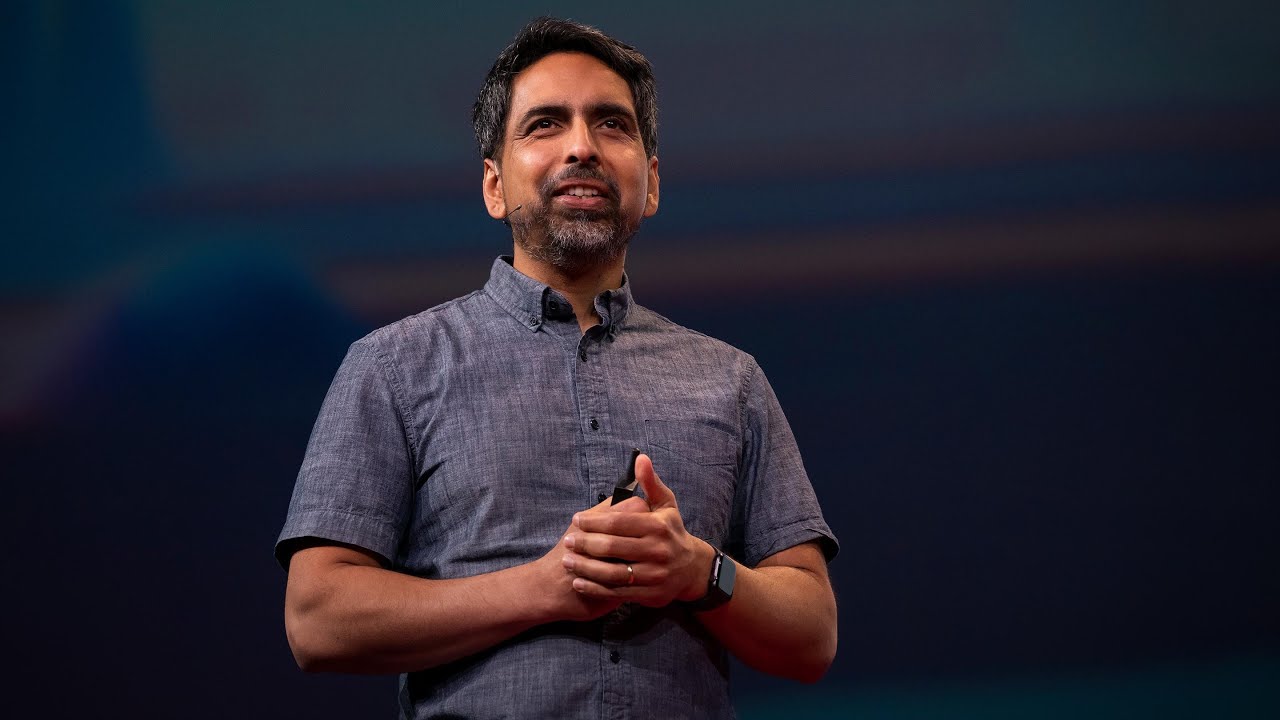
Sal Khan, the founder and CEO of Khan Academy, thinks artificial intelligence could spark the greatest positive transformation education has ever seen. He shares the opportunities he sees for students and educators to collaborate with AI tools -- including the potential of a personal AI tutor for every student and an AI teaching assistant for every teacher -- and demos some exciting new features for their educational chatbot, Khanmigo.
If you love watching TED Talks like this one, become a TED Member to support our mission of spreading ideas: https://ted.com/membership
Follow TED!
Twitter: https://twitter.com/TEDTalks
Instagram: https://www.instagram.com/ted
Facebook: https://facebook.com/TED
LinkedIn: https://www.linkedin.com/company/ted-conferences
TikTok: https://www.tiktok.com/@tedtoks
The TED Talks channel features talks, performances and original series from the world's leading thinkers and doers. Subscribe to our channel for videos on Technology, Entertainment and Design — plus science, business, global issues, the arts and more. Visit https://TED.com to get our entire library of TED Talks, transcripts, translations, personalized talk recommendations and more.
Watch more: https://go.ted.com/salkhan
https://youtu.be/hJP5GqnTrNo
TED's videos may be used for non-commercial purposes under a Creative Commons License, Attribution–Non Commercial–No Derivatives (or the CC BY – NC – ND 4.0 International) and in accordance with our TED Talks Usage Policy: https://www.ted.com/about/our-....organization/our-pol For more information on using TED for commercial purposes (e.g. employee learning, in a film or online course), please submit a Media Request at https://media-requests.ted.com
#ted #tedtalks #education #ai #khanacademy

Brown University computer scientist Ellie Pavlick is translating philosophical concepts such as “understanding” and “meaning” into concrete ideas that are testable on LLMs.
Read more at Quanta Magazine: https://www.quantamagazine.org..../does-ai-know-what-a
---------
Chapters:
---------
- VISIT our website: https://www.quantamagazine.org
- LIKE us on Facebook: / quantanews
- FOLLOW us Twitter: / quantamagazine
Quanta Magazine is an editorially independent publication supported by the Simons Foundation: https://www.simonsfoundation.org/

Basically a full day AI course crammed into 18 mins of drawing & talking. Target audience: Everyone.
Covers questions like What is generative AI, how does it work, how do I use it, what are some of the risks & limitations. Also covers things like autonomous agents, the role of us humans, prompt engineering tips, AI-powered product development, origin of ChatGPT, different types of models, and some tips about mindset around this whole thing.
Here is the full drawing:
https://blog.crisp.se/wp-conte....nt/uploads/2024/01/g
Voice translations:
- German: https://www.youtube.com/watch?v=Dgu5utapmk0
- Ukrainian: https://www.youtube.com/watch?v=rUqIzty9hkM
Would you like to make a voice translation? ElevenLabs can do really voice translation which even sounds like me :)
You can also do a manual dub with your own voice if you prefer. Whatever works best.
1. Check out https://elevenlabs.io/docs/dubbing/studio
2. Make the video & upload it to youtube or somewhere.
3. Make sure the description shows that this is an AI translation, and include a link to the original video.
4. Send a link to me (for example via a comment) and I'll add it above.
If you have practical questions you can ask Stefan Kirschnick, he made the German dub. https://www.linkedin.com/in/stefankirschnick/
🔍 In this video, we unravel the layers of AI, Machine Learning, Deep Learning, and their applications in tools like #chatgpt and Google #bard
we first go through how AI is a broad field of study that encompasses #machinelearning as a sub-field.
We then break down Machine Learning into supervised and unsupervised models, using real-world examples to illustrate their functions and differences.
We move deeper into Deep Learning: Learn about artificial neural networks and the power of semi-supervised learning in applications like fraud detection in banking.
Then we delve into Generative AI, differentiating it from discriminative models and demonstrating its capabilities in creating new, innovative outputs.
Finally we walk through Large Language Models (LLMs) and uncover the significance of LLMs in AI, their pre-training processes, and their customization for specific industry applications
*THE NO BS PRODUCTIVITY NEWSLETTER* 📧
https://www.jeffsu.org/productivity-ping/
*TIMESTAMPS*
00:00 Google’s AI Course in 10 Minutes
00:38 What is Artificial Intelligence?
01:27 What is Machine Learning?
03:28 What is Deep Learning?
05:15 What is Generative AI?
07:05 What are Large Language Models?
*RESOURCES I MENTION IN THE VIDEO*
Google’s full course: https://www.cloudskillsboost.g....oogle/course_templat
*MY FAVORITE GEAR*
🎬 My YouTube Gear - https://www.jeffsu.org/yt-gear/
🎒 Everyday Carry - https://www.jeffsu.org/my-edc/
*MY TOP 3 FAVORITE SOFTWARE*
❎ CleanShot X - https://geni.us/cleanshotx
✍️ Skillshare - https://geni.us/skillshare-jeff
📖 Readwise - https://readwise.io/jeffsu/
*BE MY FRIEND:*
📧 Subscribe to my Productivity newsletter - https://www.jeffsu.org/productivity-ping/
📸 Instagram - https://instagram.com/j.sushie
🤝 LinkedIn - https://www.linkedin.com/in/jsu05/
*👨🏻💻 WHO AM I:*
I'm Jeff, a tech professional trying to figure life out. What I do end up figuring out, I share!
_PS: Some of the links in this description are affiliate links I get a kickback from and my opinions are my own and may not reflect that of my employer_ 😇

From January 2019, Scott Pelley's interview with "the oracle of AI," Kai-Fu Lee. From this past April, Pelley's report on Google's AI efforts. And from this past March, Lesley Stahl's story on chatbots like ChatGPT and a world of unknowns.
#news #artificialintelligence #technology
"60 Minutes" is the most successful television broadcast in history. Offering hard-hitting investigative reports, interviews, feature segments and profiles of people in the news, the broadcast began in 1968 and is still a hit, over 50 seasons later, regularly making Nielsen's Top 10.
Subscribe to the “60 Minutes” YouTube channel: http://bit.ly/1S7CLRu
Watch full episodes: http://cbsn.ws/1Qkjo1F
Get more “60 Minutes” from “60 Minutes: Overtime”: http://cbsn.ws/1KG3sdr
Follow “60 Minutes” on Instagram: http://bit.ly/23Xv8Ry
Like “60 Minutes” on Facebook: http://on.fb.me/1Xb1Dao
Follow “60 Minutes” on Twitter: http://bit.ly/1KxUsqX
Subscribe to our newsletter: http://cbsn.ws/1RqHw7T
Download the CBS News app: http://cbsn.ws/1Xb1WC8
Try Paramount+ free: https://bit.ly/2OiW1kZ
For video licensing inquiries, contact: licensing@veritone.com
0:00 Introduction
0:11 The Oracle of AI
12:56 The Revolution (Part 1)
27:33 The Revolution (Part 2)
40:00 Who is minding the chatbots?

The nanoscopic world is wild!! Looking at basic objects like a grain of salt under an electron microscope looks like nothing you would have expected. Furthermore, have you ever wondered whether seeing a single atom is possible? Or how do scientists and engineers create only a few nanometers wide transistors? In this video, we will explore the electron microscope and how they are used to see nanoscopic objects. Specifically, we'll look at the Transmission Electron Microscope and the Scanning Electron Microscope and dive into how they work.
Thermo Fisher Scientific helps to propel science and engineering forward with its wide range of analytical instruments, life science solutions, specialty diagnostics, and laboratory equipment. Check them out! https://www.thermofisher.com/us/en/home.html
Do you want to support in-depth engineering and technology education?
Support us at: https://www.patreon.com/brancheducation
Website: https://www.branch.education
On Facebook: https://www.facebook.com/BranchEducation/
On Twitter: https://twitter.com/TeddyTablante
On Insta: https://www.instagram.com/brancheducation/
Table of Contents:
00:00 - The Nanoscopic World
01:17 - Scanning Electron Microscope vs Transmission Electron Microscope
02:54 - Basics of Transmission Electron Microscopes
04:15 - Why use Electrons instead of Light?
06:55 - Parts of the Electron Microscope
10:49 - Magnification: Objective and Projector
12:45 - Physics of a Magnetic Lens
15:55 - Thermo Fisher Scientific Sponsorship
17:01 - Scanning Electron Microscope
Erratum:
Script: Teddy Tablante
Twitter: @teddytablante
Modeling & Animation: Prakash Kakadiya
Animation: Mike Radjabov
Thermo Fisher Physicist: Jan Jíša
Thermo Fisher Arrangement Consultant: Jakub Kovářů
Voice Over: Phil Lee
Sound Design: www.drilu.mx
Music Editing: Luis Zuleta
Sound Effects: Paulo de los Cobos
Supervising Sound Editor and Mixer: Luis Huesca
Animation built using Blender 3.6.1 https://www.blender.org/
Post with Adobe Premiere Pro
Online References:
Cryo-EM Gives Researchers a Detailed View of the Zika Virus Structure
Semiconductor Sample Preparation for TEM and STEM, Semiconductor Analysis, Thermo Fisher
TEM Introduction Seminar - AIF NC University, YouTube Video
Wikipedia contributors. "Electron Microscope". "Transmission Electron Microscope". "Scanning Electron Microscope". "Scanning Transmission Electron Microscope". Wikipedia, The Free Encyclopedia. Wikipedia, The Free Encyclopedia, Visited August 2023
Textbooks:
R.F. Egerton. Physical Principles of Electron Microscopy, An Introduction to TEM, SEM, and AEM. Springer. 2016
Williams D., Carter C. Transmission Electron Microscopy. A Textbook for Materials Science. Springer. 2009
#electronmicroscope #tem #sem